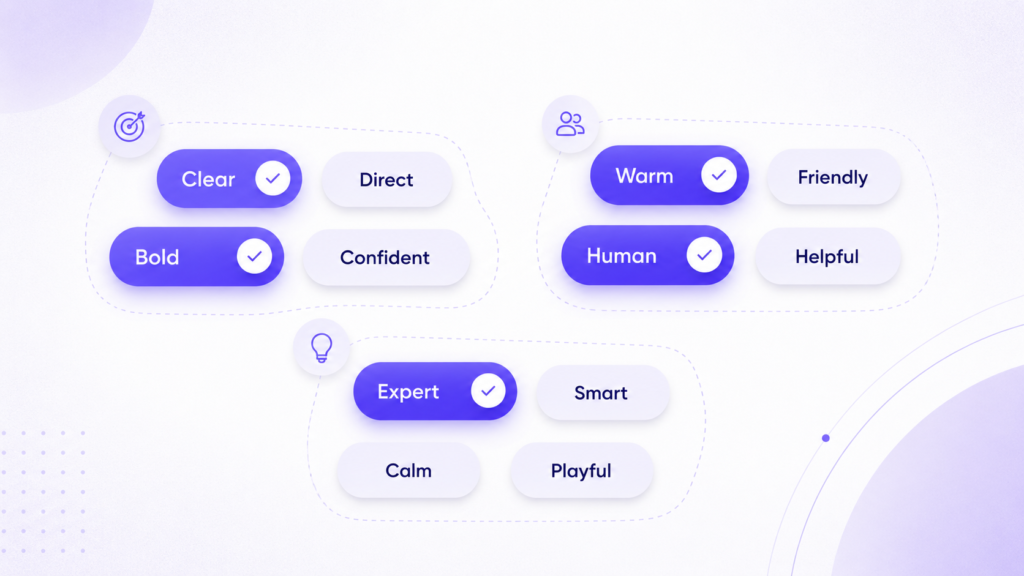

Learning how to create a brand voice is what turns a brand from a logo into a personality people recognize. The process is not guesswork; it follows a clear path from auditing what you already have to documenting a voice your whole team can use. This guide breaks brand voice development into six simple steps, with an example, so you finish with a voice that is defined, usable, and consistent.
What creating a brand voice involves
Creating a brand voice means defining the consistent personality a brand expresses in words and writing it down so anyone can apply it. It is a core part of brand voice strategy, the work that makes every future piece of content sound like the same brand. If you want the concept first, our guide to what brand voice is sets the foundation. This guide builds on our brand voice template and 200+ brand voice words, which give you the raw material to work from.
How to create a brand voice in 6 steps
These six steps move from raw material to a documented, usable voice. Follow them in order; each one feeds the next.
The six-step path to creating a brand voice.
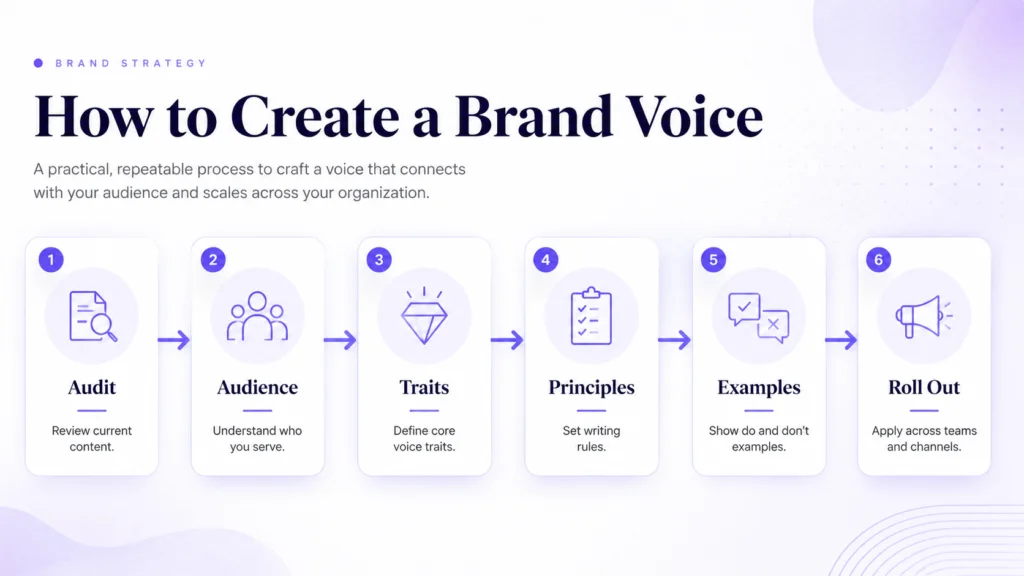
The six steps to create a brand voice.
Step 1: Audit your existing content
Start with what you already have. Gather ten to fifteen pieces of content that felt most like the brand and read for patterns in word choice, rhythm, and attitude. Why it matters: a voice built from real content is one you can actually produce. Example: an invented brand, Tidepool, found its best posts were calm, plain, and free of hype, which became its starting point.
Step 2: Understand your audience
Define who you are talking to and how they want to be spoken to. Why it matters: a voice is a relationship, and it has to fit the people on the other end. Example: Tidepool’s audience is anxious first-time budgeters, so a reassuring, jargon-free voice was the right fit, not a slick finance-bro tone.
Step 3: Define your personality traits
Distil the audit into three or four sharp traits, each with a one-line definition. Why it matters: a small set of specific traits guides writers where a long list of adjectives cannot. Example: Tidepool chose calm, honest, and practical, and wrote a sentence under each explaining what it meant.
Step 4: Set your voice principles
Turn traits into rules: preferred and banned words, sentence style, and how tone shifts by context. Why it matters: principles are what make a voice repeatable across different writers. Example: Tidepool banned urgency and exclamation points, preferred plain money language, and set a reassuring default tone.
Step 5: Create voice examples
For each trait and key rule, write a short off-brand version beside the on-brand rewrite. Why it matters: examples teach a voice faster than any description. Example: Tidepool paired “Crush your goals now!” with “Here’s a simple plan for this month,” and that single contrast made the voice click for every writer.
Step 6: Document and roll it out
Pull everything into a short guide, share it, and build it into how content gets made. Why it matters: an undocumented voice lives in one head and leaves with that person. Example: Tidepool put its voice into a two-page guide, ran a short team walkthrough, and added a voice check to its review step so the voice stuck.
Common mistakes to avoid
Most brand voice projects stumble on the same few points:
- Starting from adjectives instead of real content. Aspirational words describe a voice you cannot yet produce.
- Ignoring the audience. A voice that ignores who is reading it will not connect, however polished it sounds.
- Choosing too many traits. More than four and no writer can hold them all in mind at once.
- Skipping examples. Rules describe a voice; before-and-after examples are what teach it.
- Never rolling it out. A voice no one is trained on or checked against fades within a month.
How Claritar keeps your new voice consistent
Creating a voice is the start; keeping every draft true to it is the ongoing work, and memory is not enough across writers and deadlines. Claritar saves your new voice once, then scores any draft from 0 to 100 against it, flags off-brand lines, and returns an on-brand rewrite, so the voice you just built shapes real content instead of fading. Pair it with clear brand voice guidelines, and you catch the early signs of drift before they spread. You can see how the scoring works and put your new voice to work immediately.
Frequently asked questions
How do you create a brand voice?
Audit your best existing content for patterns, understand your audience, define three or four personality traits, set voice principles like word rules and tone, create before-and-after examples, then document and roll it out. Following these steps produces a voice that is usable and consistent, not just aspirational.
How long does it take to create a brand voice?
A focused team can draft a working brand voice in a day or two using existing content, then refine it over a couple of weeks of real use. The initial definition is quick; the value comes from documenting it well and applying it consistently afterward.
What is brand voice development?
Brand voice development is the process of defining, documenting, and refining the personality a brand expresses in writing. It covers auditing content, choosing traits, setting principles, and rolling the voice out, so the brand sounds consistent across every writer and channel.
How do you define brand voice traits?
Build them from your best existing content rather than a wish list, then sharpen each into a specific, one-line rule. Aim for three or four, name the opposite you are rejecting for each, and pair every trait with an example so writers know exactly how to apply it.
Takeaway
Creating a brand voice follows a clear path: audit, understand your audience, define traits, set principles, write examples, then document and roll out. Do the work once and the payoff is every future piece of content sounding like the same, recognizable brand, as long as you keep drafts true to the voice you built.
Just created your voice? Save it and score your next draft against it to keep every piece consistent from day one.